If getting up from a chair, climbing stairs, or walking to the market has started to hurt more than it used to, you've probably already tried the usual things — rest, painkillers, maybe a knee brace. For a lot of people in Gurgaon, that's exactly the point where a doctor first mentions the words "knee replacement." It's not a decision anyone takes lightly, and it shouldn't be. This page walks through what the surgery actually involves, who tends to need it, what recovery really looks like, and what tends to drive the cost up or down — so you're asking the right questions before you sit down with a surgeon.
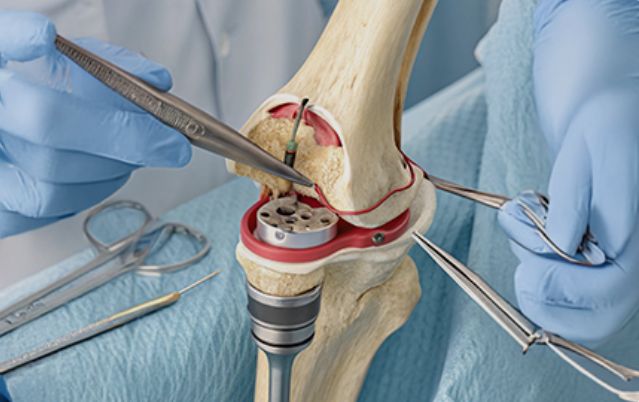
Total, Partial, or Bilateral: Which Type Applies to You
Not every damaged knee needs the same procedure. The surgeon's recommendation depends on how much of the joint is affected and which parts of the knee are damaged.
Robotic and computer-navigation systems do not replace the surgeon's judgement — they assist with precision. The system maps the knee's anatomy before surgery, helping with implant alignment and soft-tissue balancing. For suitable candidates, this may contribute to a more natural-feeling knee and a smoother early recovery. However, outcomes still depend heavily on the surgeon's experience and the patient's individual healing and rehabilitation. If you'd like a deeper look at how this technology works across procedures, our robotic-assisted approach is explained in more detail on our Robotic Surgery in Gurgaon page.
Recovery Timeline: What to Expect Week by Week
| Timeframe | What Generally Happens |
|---|---|
| Day 1 | Assisted standing and short walks with a walker usually begin within 24 hours after surgery. |
| Days 2–5 | Physiotherapy gradually intensifies, with exercises focused on movement, strength, and safe walking. Most patients are discharged by day 4–6. |
| Weeks 2–6 | Walking distance gradually increases, and many patients progress from using a walker to a walking stick as strength and balance improve. |
| Weeks 6–12 | Most day-to-day activities begin to resume, and driving may be possible for many patients depending on recovery and medical advice. |
| 3–6 months | Muscle strength, mobility, and confidence continue to improve, with most patients gradually returning to their normal routines. |
Choosing a Surgeon and Hospital in Gurgaon
Gurgaon has a dense concentration of orthopaedic centres, which makes comparison possible — and necessary. Beyond reputation, it's worth checking:
- How many knee replacements the surgeon performs in a typical year
- Whether robotic or navigation-assisted options are available if you want them
- The hospital's infection-control track record and ICU backup
- Whether a dedicated physiotherapy team is part of the post-op package
- Clarity on cashless insurance processing before admission
Support for Out-of-Station and International Patients
Gurgaon's proximity to Indira Gandhi International Airport makes it a practical choice for patients travelling from other states or abroad for joint replacement. A typical visit involves an initial video or in-person consultation, a short pre-admission work-up, the surgery and hospital stay, and a follow-up period before travelling back — often with a physiotherapy plan to continue at home. If you're planning treatment from outside India, our International Patient Guide to Treatment in Gurgaon covers visas, travel, and stay planning in detail.
Frequently Asked Questions
Find answers to common questions about knee replacement surgery, recovery, implants, bilateral procedures, and insurance coverage in Gurgaon.
Book an Appointment
Get Expert Oncology Guidance