Robotic Surgery in Gurgaon: How It Works & Who It's For
"Robotic surgery" is one of the more misunderstood phrases in modern healthcare — it can create the impression that a machine operates on its own, which isn't how robotic-assisted surgery works. In every robotic-assisted procedure, a trained surgeon remains in full control, using a console to guide robotic arms with a level of precision that can be difficult to achieve with the human hand alone. This page explains how robotic surgery works, which procedures in Gurgaon commonly use it, how it compares with laparoscopic and open surgery, and what factors can affect the cost.
In a robotic-assisted procedure, the surgeon sits at a console near the operating table and controls robotic arms fitted with surgical instruments and a high-definition 3D camera. Every movement is initiated by the surgeon. The system translates the surgeon's hand movements into precise, tremor-filtered motion at the instrument tip, working through small incisions that are often smaller than those used in traditional open surgery. The robotic system does not make surgical decisions, operate independently, or perform the procedure without active control from the surgeon.
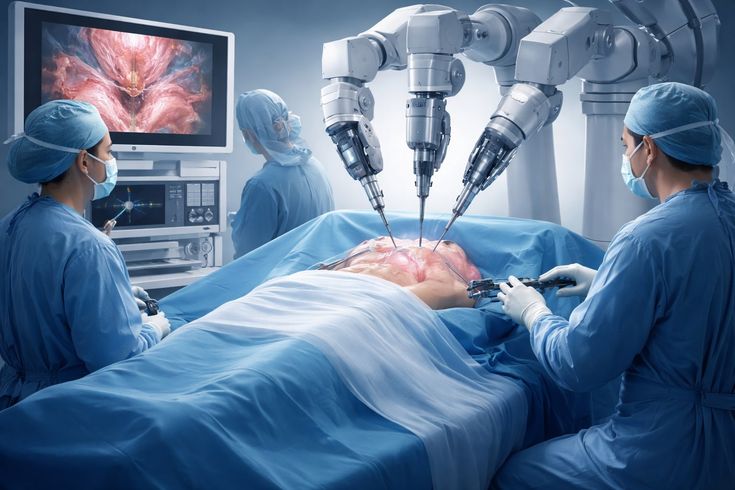
What Happens During a Robotic Procedure
Robotic surgery follows a structured process in which advanced imaging, specialised instruments, and surgeon-controlled robotic technology are used to perform the procedure with precision.
Recovery: What to Expect
Recovery after robotic-assisted surgery varies depending on the procedure, the patient's health, and the complexity of the surgery. Robotic techniques may support a faster recovery in some cases, but your surgeon will provide the most accurate timeline for your specific procedure.
| Aspect | General Pattern for Robotic-Assisted Procedures |
|---|---|
| Hospital Stay | Often shorter than the equivalent open procedure, though this varies by specialty and case complexity. |
| Pain and Mobility | Smaller incisions often mean less post-operative pain and earlier mobilisation, though individual experience varies. |
| Return to Activity | Timelines are procedure-specific, and your surgeon will set expectations based on exactly what was done. |
Support for Out-of-Station and International Patients
Gurgaon's concentration of robotic-surgery-equipped hospitals, combined with proximity to Delhi's international airport, makes it a practical base for patients travelling from elsewhere. Our International Patient Guide to Treatment in Gurgaon covers travel, visa, and stay planning in detail.
Frequently Asked Questions
Find answers to common questions about robotic surgery, safety, costs, suitability, procedure duration, and recovery.
Book an Appointment
Get Expert Oncology Guidance