Urology in Gurgaon: Conditions We Treat & When to See a Urologist
Urology covers a wide range of health issues, including kidney stones, urinary infections, prostate changes, incontinence, and bladder problems. This page explains what a urologist treats, common urology conditions in Gurgaon, when symptoms should be checked, and what treatment and costs may involve.
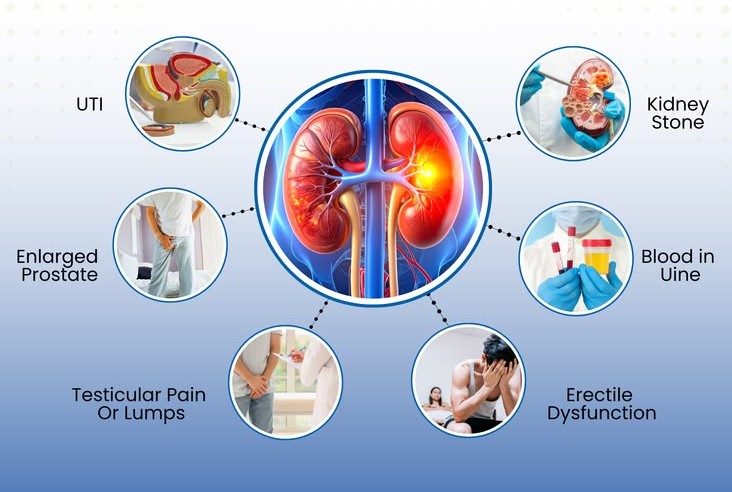
Urology covers the urinary tract in both men and women, as well as the male reproductive system. Common conditions include:
- Kidney stones and other urinary tract stone diseases
- Enlarged prostate (BPH) and related urinary symptoms
- Urinary tract infections, particularly recurrent UTIs
- Urinary incontinence and overactive bladder
- Erectile dysfunction and male infertility
- Blood in the urine (hematuria), which warrants medical evaluation
- Urologic cancers involving the kidney, bladder, prostate, and testicles
For prostate cancer specifically, see our dedicated prostate cancer treatment page for procedure- and staging-specific information.
When to See a Urologist
Certain urinary or reproductive symptoms should be evaluated by a urologist, particularly when they are persistent, recurrent, or sudden in onset.
How Urologic Conditions Are Diagnosed
Diagnosis depends on the symptoms and suspected condition. Your urologist may recommend one or more tests to identify the underlying cause.
Common Urology Procedures
| Procedure | Typically Used For |
|---|---|
| Extracorporeal Shock Wave Lithotripsy (ESWL) | Breaking up smaller kidney stones non-invasively. |
| Ureteroscopy (URSL) | Removing stones lodged in the ureter using a scope. |
| Percutaneous Nephrolithotomy (PCNL) | Treating larger kidney stones through a small incision. |
| Transurethral Resection of the Prostate (TURP) | Treating significant BPH that has not responded adequately to medication. |
| Cystoscopy | Diagnostic evaluation of the bladder and urinary tract. |
Urologist vs. Nephrologist: Which Do You Need
This is a common point of confusion. A urologist handles structural and surgical issues of the urinary tract and male reproductive system — stones, prostate enlargement, incontinence, urologic cancers. A nephrologist focuses on kidney function and disease from a medical (non-surgical) standpoint — conditions like chronic kidney disease, kidney-related high blood pressure, and dialysis management. Some conditions, like kidney stones with underlying kidney function concerns, benefit from both specialists working together.
Support for Out-of-Station and International Patients
Gurgaon's urology centres see patients from across India and abroad, aided by proximity to Delhi's international airport. If you're planning treatment from outside the city or country, our International Patient Guide to Treatment in Gurgaon covers travel, visa, and stay planning in detail.
Frequently Asked Questions
Find answers about urology in Gurgaon, kidney stones, urologist consultations, urinary symptoms, and common urology treatments.
Book an Appointment
Get Expert Oncology Guidance